To What End:
"The most intrepid poetic call and response with the sharpest political edges! I mean, WOW! There is no other thing quite like this, and I am a huge fan of Erin Mizrahi, and I, too, want to know, where did the hunger of the butterfly go?”
—CAConrad, author of Listen to the Golden Boomerang Return
“What female figure can point the way out of our political quagmire? If Gertrude Stein attempted to channel Susan B. Anthony as The Mother of Us All, Erin Mizrahi has performed a similar operation on Nancy Pelosi, the mystic, oracular spam machine flooding our psychic inboxes with personalized supplications of such combined banality and urgency that we can only respond with stupefaction. These poetic, often sublime exchanges are as hilarious as they are tragic.”
—Barbara Browning, author of The Gift
“To What End is Erin Mizrahi’s dreamy, hilarious, increasingly vulnerable correspondence with congressperson Nancy Pelosi. It’s a wild chapbook of epistolary poems where “e” responds to Pelosi’s relentless bot-like emails asking for political support, and not merely with an “Unsubscribe.” e’s letters back to Pelosi’s dire, yet generic warnings, her announcement of a “donor sweepstakes,” and her emails peppered with phrases like it’s go time brim with intimacy. e shares their daily misgivings, delightful daydreams, a wish to gift Pelosi a “bouquet of morning light,” and embarrassing memories—I HAVE ALL YOUR BOOKS e gushes when meeting their hero, dodie bellamy. As we read, Nancy seems like she might actually be reading e’s letters. Are we reaching Nancy? Or have we fallen into the ubiquitous sparkling trap of the parasocial relationship? With humor and lush language, To What End examines one of the failures of most politics—empty, tired rhetoric—and reveals how frayed human connection can get and how poignant and vital it is when we achieve it.”
—Sommer Browning, author of Good Actors

If We Break, Where We Break, How We Break

In this experimental micro-chapbook, Jason Lipeles and Erin Mizrahi weave together selections from their chevrutah sessions over the years on grief, language and poetics, queerness, and joy. This micro-chap is part of a larger project.
Strange Fire: Jewish Voices from the Pandemic
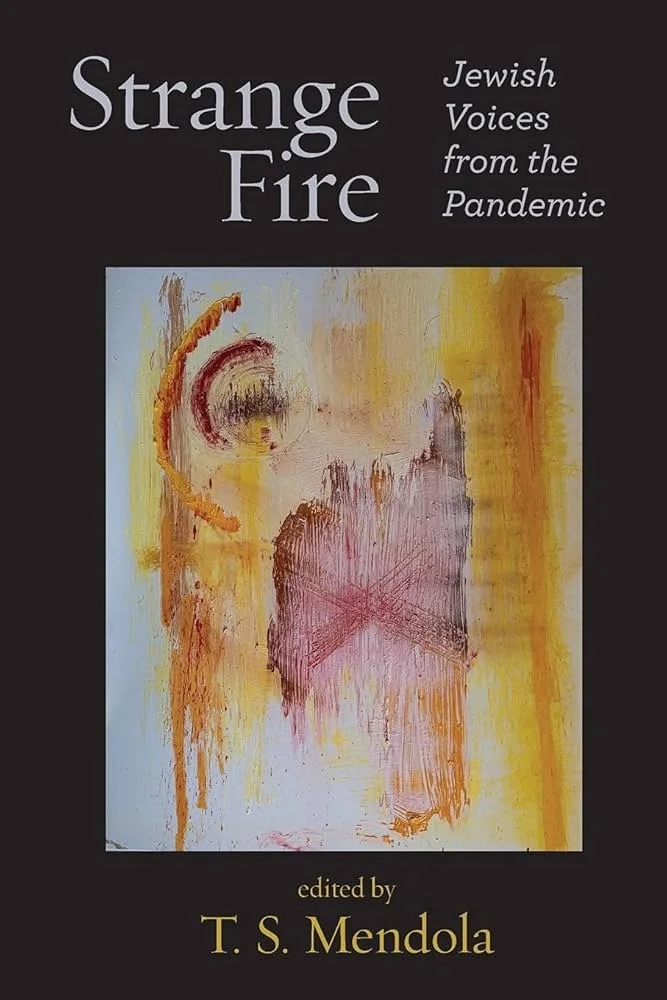
A daring exploration of UnOrthodoxy in a moment of global crisis
A century ago, the Philadelphia Jewish community held a Black Wedding to ward off the 1918 flu pandemic. A destitute bride and groom were chosen from the community and married off in Mount Moriah cemetery. A thousand guests attended, standing between and among fresh graves, waiting for the chance to give the deathly couple gifts according to their means.
Needless to say, this was not religious orthodoxy. At best, one might call it tradition steeped in kabalistic myth, at worst, heretical nonsense, “benighted superstition” likely to bring about Christian scorn and judgement.
Heretical nonsense, though, is the very best kind.
100 years after 1918, we face a new crisis. And, as with the Black Wedding, our responses are hardly orthodox.
In this anthology, award-winning essayist and cultural critic T.S. Mendola presents a collection of previously unpublished art, poetry, essays, and short stories that explore our more-or-less heretical relationship to Judaism in times of crisis. Strange Fire: Jewish Voices from the Pandemic leans into the crack between the faith we are supposed to practice and the faith we do.
From a Jewish sex worker’s essay exploring her relationship to her work as holy, to art poems made from pages ripped out of the artist’s childhood siddur, to death magic one step removed from witchcraft, Strange Fire is by turns defiant, tender, and blasphemous.